From the virtual data to what we are actually seeing on the ground, a planner’s honest read of where Indian luxury weddings are going.
Every year, the wedding industry produces trend reports. Most of them describe what was already happening six months ago, dressed up in a new language. What follows is different. It draws from Pinterest’s own 2026 data, from search trends, from what couples are actually requesting in planning conversations, and from what The Wed Consultant sees being executed at the luxury end of the Indian wedding market right now.
Some of these trends validate things couples already intuitively know they want. Others are worth knowing about before they become so visible that choosing them no longer feels like a choice.
1. The Quiet Wedding Era Is Here and It Has Nothing to Do with Budget
Soft launches are replacing loud announcements, while grand hometown weddings have been overtaken by thoughtful destination wedding weekends. Authenticity and consideration are key pillars of what is being called the “Quiet Wedding” era.
This is not a trend about spending less. The micro-wedding movement has matured into a permanent fixture of luxury wedding culture. In 2026, couples are deliberately choosing smaller guest lists not out of necessity but because intimacy allows for higher per-guest investment.
In practice this means: fewer guests, longer celebrations, better food, better accommodation, and a level of personal attention to each person present that a 500-person wedding cannot provide. Luxury celebrations range from ₹1.5 crore to ₹5 crore, with couples in 2026 spending more per guest and designing celebrations around experiences rather than scale.
What this means for planning: Your guest list is a design decision. The number of people at your wedding shapes every other element: the venue options, the menu format, the quality of the floral programme, the pace of the day. Start there before you start anywhere else.
2. Editorial Photography Is Now a Planning Priority, Not an Afterthought
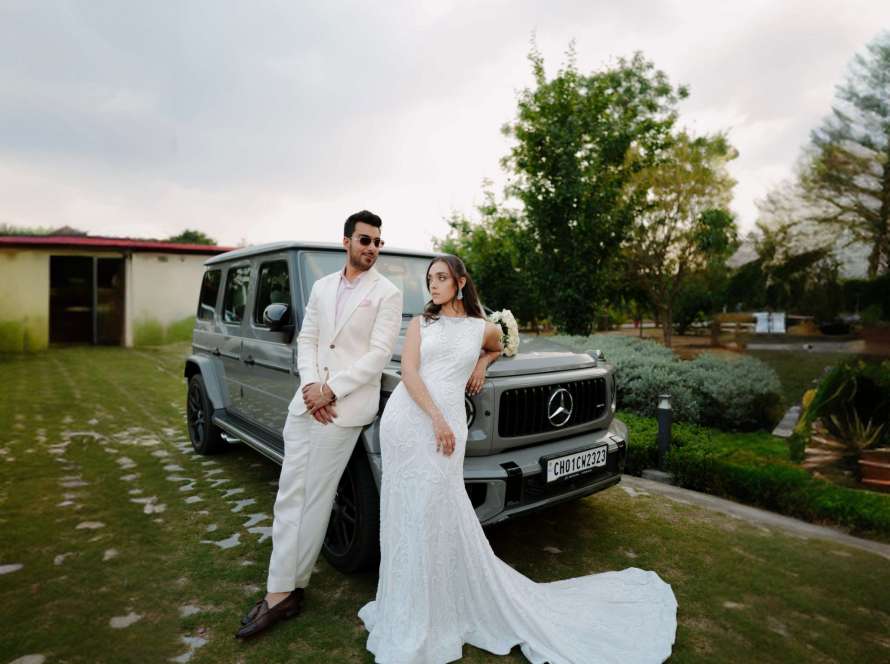
Editorial photos are emerging as a leading trend, up +308% online, combining stylised, story-driven, and meticulously composed images and videos that feel like luxury magazine spreads.
The couples arriving at The Wed Consultant planning conversations in 2026 arrive with editorial references. They come with Vogue India shoots and Condé Nast Traveller interiors and film stills. They know the difference between documentation and direction. They understand that the images from their wedding are not just personal memories; they are the record of an aesthetic world they built.
Wedding inspiration in 2026 begins long before the aisle. Couples are prioritising engagement shoots that feel more candid than staged: date nights, café moments and familiar places with built-in personality over formal studio setups, resulting in a softer, more documentary-style lead-up to the big day.
What this means for planning: Build the schedule around photography, not the other way around. Golden hour is not a nice-to-have. It is non-negotiable.
3. Venue as Identity: The Shift Away from Ballrooms
Ballrooms and banquet halls are giving way to unexpected spaces. The appeal is authenticity. These spaces carry inherent character that requires less decoration and more thoughtful integration.
Couples want venues that feel transportive, immersive, and instantly photogenic. Weddings are becoming less about formality and more about creating a scene.
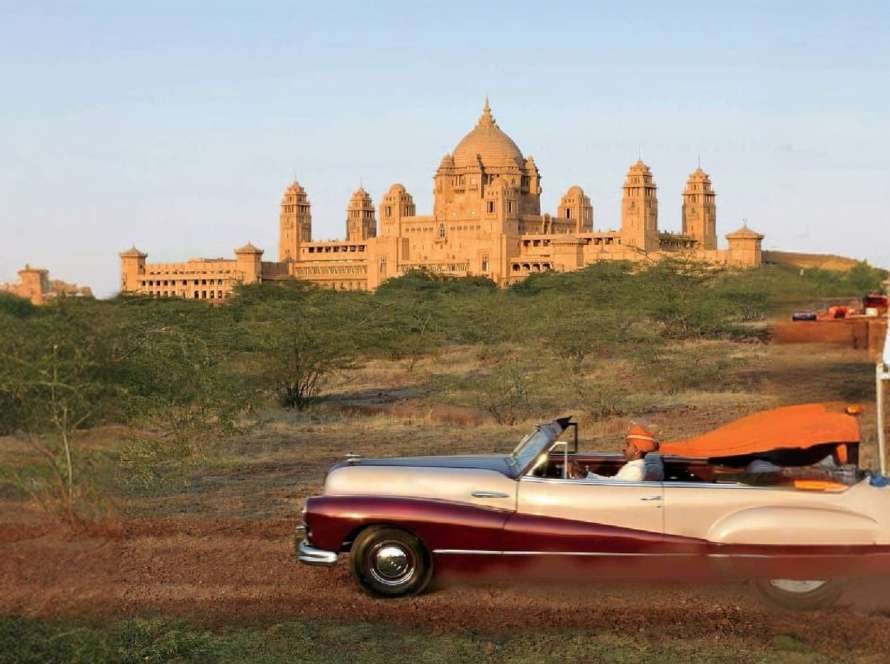
In India, this translates to a surge in private farmhouse celebrations, boutique heritage hotels, hilltop nature resorts, and coastal villas. Natural landscapes as wedding backdrops are up 50% online, as couples trade ornate stages for the quiet elegance of open skies, lush greenery, beaches, forests, and mountain vistas.
What this means for planning: If you are choosing between a five-star hotel ballroom and a beautiful private estate, the estate almost always wins on atmosphere and photography. The planning complexity is higher. That is what a strong planning team is for.
4. Palette Discipline: The Death of “More is More”
The aesthetic of Indian weddings in 2026 is leaning toward understated luxury. Soft pastel tones, natural textures, and heritage crafts are taking over the traditional loud palette. Colours like ivory, sage green, blush pink, and muted gold are dominating decor choices.
70% of millennial brides now prefer lightweight, pastel-coloured lehengas over traditional red. Shades of blush, dusty rose, ivory, sage green, and powder blue are leading bridal colour choices in 2026.
Alongside this, a countermovement is gaining ground for 2027: purple is emerging as one of the most versatile colour stories, with Purple Themes surging +1,434% on Pinterest, from lavender and lilac accents to bold plum and amethyst tones. And the global Pinterest report signals moody, nature-driven tones that feel rich, romantic and organic: plum, merlot, fig and olive, alongside opalescent finishes and iridescent hues bringing a fantasy-like sheen.
What this means for planning: Whether you go ivory-sage or deep plum-merlot, commit fully. A diluted palette produces diluted photographs. The planning decision is to choose a colour story and hold it across every touchpoint: florals, attire, stationery, lighting, and table dressing.
5. The Sensory Wedding: Food, Scent, Texture, Sound
Styling is increasingly sensory: flower bars, perfume stations, herbs, citrus and produce-based centrepieces are turning the décor into something guests can see, smell, and interact with. The overall effect is richer, moodier and more dimensional.
Just imagine a destination wedding featuring a six-course Italian dinner paired with local wines, where guests dine together under fairy lights. Food at luxury weddings in 2026 is no longer catering. It is a programmatic element with its own narrative.
The trend extends to gifting. Families are moving away from generic silverware and cash envelopes, favouring gifts that carry emotion, memory, and cultural resonance. Thoughtfully customised hampers, curated with elements reflecting the couple’s lifestyle, from favourite teas and fragrances to books and wellness essentials, are becoming increasingly popular.
What this means for planning: Brief your florist, your caterer, and your hospitality team together, not separately. The sensory experience of a wedding is a coordinated design problem, not a series of independent vendor decisions.
6. Multi-Day Programming Is Now the Standard at Luxury Weddings
The modern luxury wedding extends well beyond the ceremony and reception. Couples are investing in multi-day programming that includes welcome dinners at local restaurants, morning-after brunches with interactive food stations, and group excursions. This trend reflects a broader shift in how affluent couples define value: not by the cost of the centrepieces but by the memories guests take home.
Pinterest data shows weddings in India are evolving into visually coordinated, multi-phase experiences. For destination weddings especially, the celebration now begins when the evening guests arrive and does not conclude until the morning after.
What this means for planning: Budget for the full experience arc. A welcome evening, a pre-wedding activity, the main functions, and a considered farewell. Destination wedding guests have travelled. The programme should justify and reward that journey.
7. Traditions Reimagined: Ritual as Aesthetic
Indian wedding trends in 2026 stand out because traditions are being modernised instead of removed. Haldi functions now read like garden editorials. Mehndi evenings carry their own distinct visual identity. With live flute music instead of loud DJ music and floral showers instead of traditional turmeric, traditions are turning into themes.
This shift is particularly visible in how couples approach ceremony design. Couples are writing their own vows, incorporating cultural rituals and family traditions in unexpected combinations, and hiring celebrants who specialise in narrative-driven ceremonies. The ceremony is no longer the formality before the party.
What this means for planning: Each function on your wedding schedule deserves its own brief, its own visual identity, and its own considered atmosphere. A wedding where every event looks and feels the same misses the opportunity that a multi-day celebration provides.
The Through-Line
Read across these trends and one idea emerges clearly. The most desirable luxury wedding in 2026 and 2027 is not the most expensive wedding or the most elaborately decorated. It is the most intentional one. The wedding where every decision, the guest list, the venue, the palette, the menu, the pace of the day, was made with a clear point of view and executed with discipline.